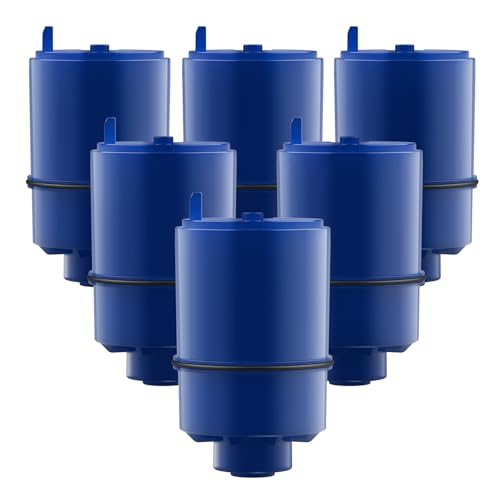
We may earn a commission when you buy through links on this page, at no extra
cost to you. As an Amazon Associate I earn from qualifying purchases.
If your water tastes of chlorine, the Waterdrop FC-01 is the cheapest fix there is. Waterdrop states it is certified against NSF/ANSI standard 42, which is the standard written for chlorine, taste and odour, and it has close to 10,000 owner ratings behind it. It fits by hand in two minutes and comes off again when you move out.
If your reason is lead rather than taste, that is a different standard. Lead sits under NSF/ANSI 53, and faucet mounts certified under 53 do exist. Standard 42 is a real credential for a real job and it is not a lead claim, so read which number a filter holds before you buy it for a contaminant.
Last updated
Two standards, one badge
Nearly every faucet filter says "NSF certified" somewhere on the box, and
that phrase covers two quite different products. The number after it is what
separates them, and it is usually in smaller type.
Lead, cysts, VOCs, asbestos, mercury, and 60 more named contaminants
Your water report or your plumbing gives you a specific reason
Most faucet filters are standard 42 products, and that is the right
answer for most buyers. Chlorine taste is what sends people looking
for a filter in the first place, standard 42 is the certification written for
it, and a twenty dollar filter that holds it is doing exactly what it says.
Lead is a standard 53 claim, and faucet filters holding it exist.
NSF's listing for lead reduction includes faucet mounts, PUR and Brita among
them. If lead is your reason, that is what to search for, and the
lead guide covers how to check a specific model.
For plumbing that has tested positive, an
under-sink system certified for
lead is the more thorough answer, because it treats every drop from that
tap rather than only what you remember to divert.
Will it fit
This is the most common reason these come back, and it takes ten seconds to
settle. Unscrew the aerator at the end of your spout. If it
comes off and leaves a thread, a faucet filter will almost certainly fit. If
your tap has a hose that pulls out, or a spray head, it will not, and no
adapter in the box changes that.
A pull-out tap is not the end of it: a
countertop filter gets filtered
water at that sink without touching the plumbing, and an under-sink system
with its own small tap is the permanent version.
What it costs to run
The purchase price is the small number. A cartridge every two to
three months is four to six a year, and at ten to twenty dollars
each the running cost passes the price of the filter within the first year
and keeps going.
That is worth doing the arithmetic on before buying, because an under-sink
system with a twelve month cartridge often costs less over two or three
years despite costing more on day one. Where a faucet filter is genuinely
unbeatable is a rental, a short stay, or finding out whether filtered water
is worth the bother at all.
The filters
No scores here, deliberately. Our formula weighs owner ratings,
certification, cartridge count and warranty, and a faucet filter is one
cartridge by definition and mostly carries no warranty at all, so a number
out of 100 would rest on ratings alone while looking like a measurement.
They are ordered by the job they do.
★ Best overall
Waterdrop FC-01 Faucet Water Filter
Renters and anyone whose only complaint is that the water tastes of chlorine
Waterdrop
★★★★½4.49,952 ratings
The cheapest fix for the most common complaint. Chlorine taste is what sends most people looking for a filter, standard 42 is the certification written for exactly that, and this is the cheapest thing in the category and fits by hand. It has close to 10,000 owner ratings, which is more evidence than the rest of this category put together. What it is not is a lead filter, and the certification it names says so plainly if you read which standard it is.
Brand
Waterdrop
Stages
1-stage
Capacity
320 gal
Flow rate
Diverter on the spout, filtered or unfiltered
CertificationThird-party tested, per manufacturer
Certified to reduce
Chlorine (standard 42)
Taste and odour (standard 42)
Checked against NSF International listings
listed as FC-01 ·
checked 2026-08-06 Waterdrop states the filter is tested and certified by NSF International against NSF/ANSI standard 42 for the reduction of chlorine, taste and odour. Waterdrop holds 411 listings under standard 42 in NSF's own database and the FC models are not among the entries returned for that trade name, so this is carried as the manufacturer's statement rather than a record we have read.
What we liked
The cheapest way there is to stop tap water tasting of chlorine
Nearly 10,000 owner ratings, far more field evidence than anything else in this category
320 gallons or three months per cartridge, which is a normal interval for the type
Fits by hand in a couple of minutes and comes off again when you move out
A diverter, so you filter drinking water and not the washing up
Worth knowing
Standard 42 is the aesthetic standard, so this is a chlorine and taste device rather than a lead one
Will not fit a pull-out or spray tap, which is the most common reason for a return
A cartridge every three months adds up, so the running cost outruns the purchase price quickly
Anyone who has cracked a plastic faucet filter and wants a metal one
iSpring
★★★★4.1810 ratings
The metal one. Faucet filters live somewhere that gets knocked, and the plastic housings are what fail rather than the media inside them, so a chrome body is a real answer to a real complaint. It costs twice what the Waterdrop does and its claim is a longer interval and a sturdier shell rather than a different level of filtration.
Brand
iSpring
Stages
1-stage
Capacity
500 gal
Flow rate
Diverter on the spout, chrome housing
Warranty
1 year
CertificationNone stated
What we liked
A metal housing rather than plastic, which is the part that cracks on these
A longer rated interval than the cheaper filters, so fewer cartridges a year
From the brand whose under-sink systems carry the widest verified claim lists we have found
A one year warranty, which most faucet filters do not offer at all
Worth knowing
Twice the price of the Waterdrop for the same job
810 ratings against nearly 10,000, so much thinner evidence
No certification named for this model, where the Waterdrop names standard 42
Chlorine-sensitive skin, and bathroom taps the kitchen filters will not fit
Waterdrop
★★★★4.01,003 ratings
The one for the other room. Bathroom taps take different fittings from kitchen taps, which is why a kitchen faucet filter usually will not go on one, and chlorine on skin and hair is a real complaint even where the drinking water is fine. Judge it on that rather than against the drinking water filters above: it is solving a different problem and its rating is the lowest here.
Brand
Waterdrop
Stages
1-stage
Flow rate
Bathroom tap fitting
CertificationNone stated
What we liked
Built for a bathroom tap, where the kitchen fittings usually do not fit
Aimed at chlorine on skin and hair rather than drinking water, which is a different and real complaint
Same fit-by-hand installation as the kitchen filters
Worth knowing
The weakest rating on this page at 4.0
No certification named, so the chlorine claim rests on the manufacturer
A bathroom tap is not usually where a household drinks, so this solves a comfort problem rather than a water quality one
A PUR owner filtering for taste who wants the running cost down
Glacier Fresh
★★★★½4.43,075 ratings
The cheap way to keep a PUR housing running, and the one product on this page where the certification argument cuts against the purchase. A certification is granted to a system in one configuration, and that configuration names a cartridge. Put a different cartridge in and the housing is outside the listing that made it worth buying. If the reason you own a PUR is taste, that is a reasonable trade for the money. If the reason is lead, it is not.
Brand
Glacier Fresh
Stages
1-stage
Flow rate
Drops into an existing PUR housing
CertificationNone stated
What we liked
Fits a housing millions of households already own, so it costs nothing extra to try
3,075 owner ratings, second only to the Waterdrop here
Considerably cheaper per cartridge than the original
Worth knowing
An aftermarket cartridge in a certified housing is not the configuration the certificate covers, so a PUR system running one is outside its own listing
Glacier Fresh holds no listing with any certifier we have checked, so there is no claim list to read
If your reason for owning a PUR is its lead certification, this is the one product here that would undo it
For chlorine and taste, which is why most people buy one, the Waterdrop FC-01 is the pick: the cheapest thing in the category, close to 10,000 owner ratings, and Waterdrop states it is certified against NSF/ANSI standard 42, which is the standard written for exactly that job. If your reason is lead rather than taste, standard 42 is not that claim and you want a filter whose certified list names lead, which means a standard 53 product.
Do faucet filters remove lead?
Some do and most do not, and the way to tell is the standard number rather than the word certified. Lead sits under NSF/ANSI 53, the health effects standard, and faucet mount filters certified under 53 for lead reduction do exist: NSF's listing includes faucet mounts from PUR and Brita. A filter certified only under standard 42 has been tested for chlorine, taste and odour, which is a real credential for a real job and is not a lead claim.
Are faucet water filters worth it?
For chlorine taste they are the cheapest fix there is, at under twenty dollars with a couple of minutes of fitting and nothing permanent. The running cost is where they stop being cheap: a cartridge every two to three months adds up faster than the purchase price suggests, and over a couple of years an under-sink system with a twelve month cartridge often costs less. For a rental, or for testing whether filtered water is worth the bother, they are hard to beat.
Will a faucet filter fit my tap?
It fits a standard threaded spout and it does not fit a pull-out sprayer, a spray-head tap or most modern designer taps, and that is the single most common reason these get returned. Unscrew the aerator at the end of your spout: if it comes off and leaves a thread, a faucet filter will almost certainly fit. If your tap has a hose that pulls out, it will not, and a countertop or under-sink filter is the way to get filtered water at that sink.
How often do you change a faucet filter cartridge?
Every two to three months for most, or 100 to 500 gallons depending on the model, and the volume usually binds before the date in a household that drinks a lot of water. The practical signal is chlorine taste coming back. Running one long is not dangerous but it is pointless, because a spent carbon cartridge stops adsorbing and simply passes water through.
Can I use a cheaper replacement cartridge in my faucet filter?
You can, and it is worth knowing what it changes. A certification is granted to a system in one configuration, and that configuration includes the cartridge named on the certificate. Fit a different one and the housing is no longer the thing that was tested, whatever the housing still says on it. If you bought the system for taste that may be a reasonable trade for the money. If you bought it because it was certified for lead, it is the one saving that undoes the reason you bought it.