We may earn a commission when you buy through links on this page, at no extra
cost to you. As an Amazon Associate I earn from qualifying purchases.
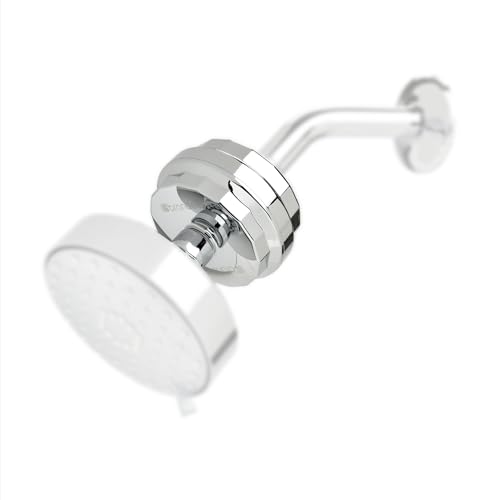
Shower filters are chlorine devices, and the one to buy depends on what you already own. If you like your shower head, the Brondell VivaSpring fits between the arm and the head and is the only filter here whose maker names the standard written for shower filters. If you own a Culligan filtered head, the Waterdrop WHR-140 is the cartridge that refills it.
The number nobody prints: NSF/ANSI 177 is the shower filter standard and it certifies one thing, free available chlorine. 9 models held it when we checked. So a box promising fifteen stages and eight contaminants is describing its contents, not a tested result, and the media inside is what decides whether it works.
Last updated
One standard, one claim, nine models
There is a standard written for exactly this product.
NSF/ANSI 177 covers shower filtration systems, and it
contains a single claim: free available chlorine reduction.
Not lead, not hardness, not the eight or ten things a typical box lists.
One.
When we queried NSF's database it returned
9 certified models holding it. That is a
measurement rather than a broken search: the same query shape against
chlorine reduction under standard 42 returned
5,553 models in the same session.
This does not mean shower filters do not work. It means the
category mostly competes on descriptions of what is inside the cartridge
rather than on tested outcomes, so the useful questions are what media it
uses, how long it lasts and what it fits. Where a maker does name the
standard, that is worth something, and one here does.
Why the media matters more than the stage count
A shower is a hostile place for a filter. The water is hot and it moves
fast, so the cartridge gets roughly a second of contact. That single fact
explains the whole category.
Media
How it removes chlorine
In a shower
KDFWhat almost every serious shower filter actually uses
A copper and zinc alloy that converts free chlorine by a redox reaction
Works in hot water, and does not need long contact
Activated carbonExcellent at a kitchen tap, working against itself in a shower
Adsorbs chlorine onto a huge internal surface area
Adsorption falls off in hot water and needs contact time a shower does not give
Calcium sulphiteCommon as a second layer rather than on its own
Reacts with free chlorine, often blended with KDF
Works hot, and is spent faster
Carbon is the wrong tool here and it is the right tool almost
everywhere else. It works by adsorption, which wants cool water and
contact time, and a shower offers neither. KDF converts chlorine chemically
instead and does not care that the water is hot. That is why the filters
worth buying say KDF on them, and it is the reason a "15-stage" label tells
you less than one line of media composition.
Read stage counts the way we read them everywhere:
they count layers inside one cartridge, every
filter here is a single cartridge, and a bigger number is a longer
ingredients list rather than a better filter.
What a shower filter will not do
Hardness. Scale on the glass is dissolved calcium and
magnesium, and removing those takes ion exchange with a resin bed and salt.
No cartridge in a shower arm does that, whatever the listing says about hard
water. A great deal of what gets blamed on hard water for skin and hair is
actually chlorine, which is the part these do fix.
Chloramine. Standard 177's single claim is free available
chlorine. Chloramine is a separate claim, held by far fewer products, and it
is more stable and harder to remove.
Our chlorine guide covers which one your
utility uses and how to find out.
The filters
★ Names the standard
Brondell VivaSpring Compact Shower Filter
Anyone who likes their shower head and wants a filter with a standard behind it
The one that names the standard. NSF/ANSI 177 is written specifically for shower filters and contains a single claim, free available chlorine reduction, and Brondell states the FF-30 cartridge in this housing holds it. That is unusual: almost nothing in this category names a certification at all. It also solves the practical problem, because it sits between the arm and the head you already have rather than replacing it.
Brand
Brondell
Stages
1-stage
Capacity
10,000 gal
Flow rate
Fits between any standard half inch arm and your own head
CertificationThird-party tested, per manufacturer
Certified to reduce
Free available chlorine (standard 177)
Checked against NSF/ANSI 177 listings
listed as FF-30 cartridge ·
checked 2026-08-06 Brondell states the FF-30 shower filter is certified to NSF/ANSI standard 177, whose single claim is free available chlorine reduction. Brondell certifies with WQA rather than NSF, and NSF’s own 177 listing held nine models when we checked, none of them Brondell. Carried as the manufacturer’s statement.
What we liked
The only filter here whose maker names the standard written for shower filters, NSF/ANSI 177
Keeps your own shower head: it fits between the arm and the head rather than replacing anything
US-sourced KDF, denser media in a housing 53% thinner than the usual barrel
10,000 gallons or six months on the FF-30 cartridge
Worth knowing
Only 670 ratings, and the four colour finishes share them, so it is one product in four coats of paint
The cartridges are proprietary to the CSF housings
Standard 177 covers free available chlorine and not chloramine, which is a different claim
The one that replaces the head rather than sitting behind it, which is the right buy if the head was due anyway. The interval is the longest here at six to nine months and the cartridge can be rinsed between changes, which matters on hard or sediment-heavy water. Read the "33-stage" number the way we read every stage count: it describes media layers inside one cartridge, and every filter on this page is one cartridge.
Brand
iSpring
Stages
1-stage
Flow rate
A complete shower head, fits any standard half inch arm
CertificationNone stated
What we liked
A whole shower head rather than an adapter, so it replaces a tired one at the same time
The longest interval here at six to nine months, on the FSF2 cartridge
A no-clog design aimed at hard water, and the cartridge can be rinsed and reused between changes
Fits any standard half inch arm without tools
Worth knowing
You get iSpring’s shower head whether you wanted a new one or not
The marketed "33-stage" figure counts media layers rather than cartridges: it is one cartridge, as they all are
These two are cartridges rather than filters, and they are not scored. A
consumable has no stage count of its own and no warranty, so half our
formula says nothing about one, and a number built from half a formula still
reads as authoritative. What matters on a cartridge is what it fits and how
often it is changed.
The VivaSpring refill
Brondell VivaSpring FF-30 Replacement Cartridge
4.4 stars from 150 owner ratings
The refill for the VivaSpring housing, carrying the same standard 177 statement as the filter it goes into. Worth knowing before you buy the housing rather than after: a shower filter is a consumable at six-month intervals, and the cartridge price is the number that decides what the thing actually costs to own.
Fits
Brondell VivaSpring Compact Shower Filter, CSF housings only
Replace
Every 6 months, or 10,000 gallons
What we liked
Carries the same NSF/ANSI 177 statement as the housing it goes into
Cheaper than replacing the whole filter, which is the point of a refillable housing
Six months or 10,000 gallons
Worth knowing
Fits CSF housings only, so it is no use unless you own one
150 ratings, the thinnest evidence on this page
Checked against NSF/ANSI 177 , listed as FF-30,
on .
Brondell states this replacement filter is certified to NSF/ANSI standard 177. Same basis as the housing above: their certifications are held with WQA rather than NSF.
The cheapest way to keep a Culligan filtered shower head running, and it uses the same KDF media as filters costing twice as much. KDF is a copper and zinc alloy that strips chlorine by a redox reaction rather than by adsorbing it, which is why it is the standard choice for showers: carbon works less well in hot water and with the very short contact time a shower gives it. Check the compatibility list against your housing before ordering.
For chlorine, yes, and that is what they are built for. The media most of them use is KDF, a copper and zinc alloy that converts free chlorine by a redox reaction rather than adsorbing it, which matters because a shower gives a filter hot water and about a second of contact time, and both of those work against activated carbon. Claims beyond chlorine are where the category gets loose, and the certification tells you why.
Are shower filters NSF certified?
Very few are, and the standard exists. NSF/ANSI 177 is written for shower filters and contains exactly one claim, free available chlorine reduction. When we checked NSF's database it returned nine certified models, against 5,553 for chlorine reduction under standard 42 in the same session, so that nine is a real count rather than a failed search. Brondell states the VivaSpring holds standard 177, and Brondell certifies with WQA rather than NSF.
Do shower filters remove chloramine?
That is a different claim and a harder job. NSF/ANSI 177 covers free available chlorine, and chloramine is a separate certified claim under standard 42 that only 216 models hold. Chloramine is more stable than free chlorine and needs more contact time or catalytic media, which a shower filter has very little of. If your utility uses chloramine, our chlorine guide covers what that changes.
What does 15-stage or 33-stage mean on a shower filter?
It counts layers of media inside a single cartridge, not filtration stages in the sense a whole-house system means. Every shower filter on this page is one cartridge, and we score them that way. It is not dishonest, it is just not comparable between brands, and a higher number does not indicate a better filter. The specification worth comparing is what media it uses and how long it lasts.
Do shower filters help with hard water?
Not in the way a softener does. Hardness is dissolved calcium and magnesium, and removing those takes ion exchange, which needs a resin bed and salt, not a cartridge in a shower arm. What a shower filter genuinely changes is chlorine, and a lot of what people attribute to hard water on skin and hair is chlorine. If your complaint is scale on the glass, that is hardness and a shower filter will not fix it.
How often should you change a shower filter?
Every six months or around 10,000 gallons for most, and the date usually binds before the volume. The signal is chlorine smell returning. Running one long is not dangerous, but a spent cartridge is doing nothing, and on a consumable at six-month intervals the cartridge price is what decides the real cost of the filter rather than the purchase price.